
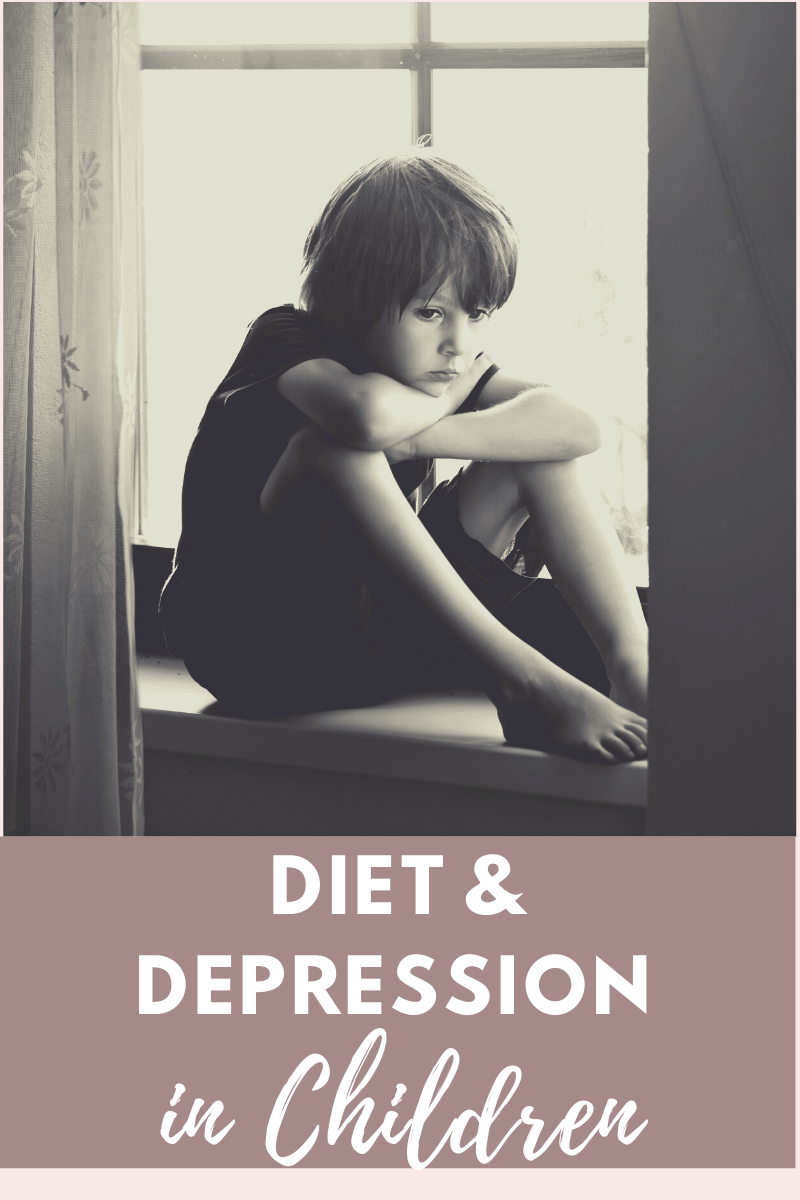
Before my studies, I assumed that depression and anxiety were adult disorders. After all, what would a child or teenager have to be so distraught about?
I was so wrong.
Just this last week in my practice, I met two young adults (18 and 10 years old) who are both battling depression and anxiety daily. Hearing them explain how it affects their self-esteem, relationships, and overall well being absolutely broke my heart into a million pieces. As a mother myself, I understand the amount of worry that having children provokes. When our children suffer, we suffer.
How many children suffer from depression and anxiety?
1 in 4 children between the ages of 13 and 18 are diagnosed with an anxiety disorder (1)
Anxiety disorders also often co-occur with other disorders such as depression, eating disorders, and attention-deficit/hyperactivity disorder (ADHD). (2)
In my opinion, 1 in 4 children is 1 too many. We need to do everything we can to stop this trend.
Thankfully, there’s good news! Healthy food doesn’t just support the body, but it supports the MIND too! Some fruits and vegetables can positively affect your brain chemistry and help ward off depression. Food truly is the BEST medicine.
Research has found there to be a “significant, cross-sectional relationship between unhealthy dietary patterns and poorer mental health in children and adolescents.” (3)
But don’t unhappy people tend to also eat unhealthy?
Research is proving the opposite to be true actually. According to a 2014 study done by the American Journal of Public Health, “although stress and depression can promote unhealthy eating, recent longitudinal studies have suggested that reverse causality is a less likely explanation for long-term associations.” (4)
Poor diet also shows a connection to ADHD in children as well. This connection seems to be especially stronger with young girls according to a study that concluded that “the relationship between food energy intake and ADHD symptoms was especially pronounced in girls and this may help to explain the reported association of ADHD symptoms with overweight adolescent girls.” (5)
So, eating unhealthy can lead to excess weight and/or obesity, which is linked to ADHD, which has been found to be synergistic with depression and anxiety. See the correlation? I sure do.
There are also many studies that prove that those who eat a mostly plant based diet “experience significantly fewer negative emotions than omnivores.” And “those eating better also report feeling more “vigor”. (6)
But why?
The researchers had two conclusions: “People eating better diets may be happier because they’re healthier and that the proinflammatory compound arachidonic acid found in animal products can adversely impact mental health via a cascade of neuroinflammation”. (7)
This means that a compound found in animal products can cause inflammation in the brain. There is also information that suggests that people with higher levels of arachidonic acid in their blood may end up at significantly higher risk of suicide and episodes of major depression. (8)
So, is meat the problem?
Meat may be partly to blame but there are other factors at play here as well.
According to one study, “people who ate processed foods like sweetened desserts, fried foods, and processed meats were more likely to be diagnosed with depression than people who largely relied on unprocessed, whole foods”. (9) This particular study was done on middle aged individuals; however, I always explain to my patients that children are typically affected 10 times more than adults are to the same stimuli. Yes, their bodies are resilient, but they are also a lot more sensitive and fragile.
Let’s take a short stroll down Sugar Lane for a moment….
Did you know that sugar can be more addicting than cocaine? This 2007 study found that “the brain’s sweet receptors are not adapted to constant and high levels of sugar. This intense sweetness can stimulate the brain’s reward center and may be more pleasurable than cocaine, even in people with a drug addiction.” (10)
And what happens when you suddenly can’t get access to your drug of choice? You lose self-control. Want to know who already struggles with maintaining self-control? Children! Feeding a diet high in sugar to children is setting them up to fail. Period.
Just like meat, too much sugar can lead to inflammation. What is inflammation linked to? The answer is depression amongst other serious health issues. (11)
What about carbohydrates?
Not all carbs are created equal. Some carbs have a higher Glycemic Index (GI) than others. This is why Fruit Loops are no nutritional match for sweet potatoes. This 2015 study showed that “women who ate high-GI foods had a higher risk of depression than people who ate lower-GI foods. Women who ate a higher amount of lower-GI foods, such as vegetables and non-juiced fruit, had a lower risk for depression”. (12)
Still not convinced? Spanish researchers found “individuals who ate the most baked goods had a 38 percent higher risk of depression than individuals who ate the least number of baked goods”. (13)
How can you help?
You can start by limiting those foods mentioned above. Yes, that means limiting junk food, sugar, baked goods, processed foods, fried foods, and even meat. I know……..It sounds impossible. I’m here to tell you that many of my patients have successfully done it and you can too!
Work on introducing foods that help PREVENT and FIGHT depression such as vegetables (the greener the better!), nuts and seeds, and fruits high in antioxidants.
Not sure where to start?
I am here to help! My expertise is family nutrition. I know all of the tricks and tips to help families eat healthier. We can do this together. Your children deserve it. You deserve it. Don’t hesitate.
Sources:
1. https://adaa.org/about-adaa/press-room/facts-statistics
2. https://adaa.org/about-adaa/press-room/facts-statistics
3. https://www.ncbi.nlm.nih.gov/pmc/articles/PMC4167107/
4.Le Port A, Gueguen A, Kesse-Guyot E, Melchior M, Lemogne C, Nabi H, Goldberg M, Zins M, Czernichow S, Association between dietary patterns and depressive symptoms over time: a 10-year follow-up study of the GAZEL cohort.PLoS One. 2012; 7(12):e51593.
5. https://www.ncbi.nlm.nih.gov/pubmed/23166770/
6. Beezhold BL, Johnston CS, Daigle DR, Vegetarian diets are associated with healthy mood states: a cross-sectional study in Seventh Day Adventist adults. Nutr J. 2010;9:26.
7.Beezhold BL, Johnston CS, Daigle DR, Vegetarian diets are associated with healthy mood states: a cross-sectional study in Seventh Day Adventist adults. Nutr J. 2010;9:26.
8. Vas VJ, Kac G, Nardi AE, Hibbeln JR. Omega-6 fatty acids and greater likelihood of suicide risk and major depression in early pregnancy. J Affect Disord. 2014;152-154:76-82.
9. https://www.cambridge.org/…/96D634CD33BD7B11F0C731BF73B…
10. https://journals.plos.org/plosone/article…
11.https://www.mdedge.com/…/depression-and-inflammation…
12. James E Gangwisch Lauren Hale Lorena Garcia Dolores Malaspina Mark G OplerMartha E Payne Rebecca C Rossom Dorothy Lane, The American Journal of Clinical Nutrition, Volume 102, Issue 2, 1 August 2015, Pages 454–463
13. https://www.cambridge.org/…/fastfood_and_commercial…
Questions? Just ask!
Want to work with me 1:1 to create the perfect diet for you and/or your family? Contact me today at dana@thrivekin.com.